

In-depth Report
-
Luma Ray 3 is the third-generation video generation model of Luma AI (Luma Labs)'s Dream Machine platform. The core selling point is a Vincent video engine with "visual reasoning" capabilities: it understands the intention of the prompt word, evaluates the intermediate results and iterates itself before generation, thereby significantly improving instruction compliance and physical consistency. Ray 3 is also the first product to implement a native 16-bit HDR pipeline in mainstream AI video models and support 16-bit EXR frame sequence export, allowing AI videos to directly enter professional color grading and synthesis processes such as DaVinci and Nuke for the first time. It has a leading reputation in terms of motion realism and physical simulation. Its shortcomings are that the output is capped at 1080p, does not have native audio, and has no permanent free files.
-
Luma AI is an AI laboratory headquartered in San Francisco. It was founded in 2021 by Amit Jain and Alex Yu (both from Apple). It made its debut with a NeRF-based 3D scanning mobile phone application in the early days. After launching the Dream Machine platform in June 2024, it turned to video generation. Its video model pedigree is roughly: Ray 1 (mid-2024)/Ray 2 (early 2025, focusing on motion continuity and videos up to 1 minute)/Ray 3 (released in September 2025, about twice the size of Ray 2, introducing inference and HDR). Ray 3’s subsequent rapid iterations: Ray3.14 (approximately January 2026) brings native 1080p, approximately 4x speedup, and approximately 3x cost reduction; Ray3.2 (June 9, 2026) adds up to 16 keyframes, up to 8 face performance migration and skeletal posture tracking in a single shot. In 2026, the company was rumored to become a unicorn with approximately US$900 million in financing and a valuation of US$4 billion, and reached a cooperation with Adobe to integrate Ray 3 into Firefly; with Sora shutting down in March 2026, Luma became the default creative video platform for a large number of former Sora users after they migrated.
-
The capabilities of Ray 3 can be divided into several main lines. The first is inference-driven generation: the model uses a chain of thinking to understand prompt words, judge the first draft, and retry itself until it reaches the quality threshold. Therefore, it is significantly better than similar models generated in a single pass in terms of complex multi-step actions and narrative coherence. The second is the industry's first native 16-bit HDR pipeline, which can generate or upgrade HDR images from text, SDR images and even existing SDR videos, and export them as 16-bit EXR frame sequences (ACES2065-1 color space) for direct access to professional post-production. The third is Draft mode: quickly test the footage at about 5 times the speed and about 5 times the low cost, and then use HiFi diffusion to "refine" the best footage into a 4K HDR finished product. The fourth is video-to-video and editing capabilities: Character Reference uses a single reference picture to lock character consistency and clothing; Modify Video supports first frame/last frame control, dress change/scene change/relighting/virtual implantation, and tries to maintain the physical logic of the original performance; supporting tools such as Reframe, Extend, Upscale, etc. make it more like a post-production rather than a pure generator. Visual annotation (Annotation) allows users to draw lines directly on still frames to define layout, movement and character interaction, reducing prompt word engineering. In actual measurements, the gait, reflection, and camera feel of single-lens cinematic movements (such as the hand-held zooming of a woman in red walking towards the camera in a wet Tokyo alleyway on a wet night) are close to real movements. The physical behavior of steam and light when the image is transferred to video is also convincing; however, crowded group performances, readable text in the screen, and extremely close hands and faces are still weaknesses.
-
Luma uses a points subscription system. As of mid-2026, the personal files are Plus US$30/month (annual payment is 25, including 10,000 points, commercial use, and watermark removal), Pro is US$90/month (annual payment is 75, including 40,000 points, 4 times the usage of Luma Agents), Ultra US$300/month (including 150,000 points, 15 times the usage of Agents); and the Lite file is about 9.99 USD/month (with watermark). Team/Enterprise Contact Sales. Pay-per-view caliber: Ray3.2 text/image to video, draft is about 20 points/5 seconds, 540p 50, 720p 100, 1080p 400 (every 5 seconds), HDR and EXR are priced at 2 times and 3 times respectively; video to video is billed by the second (1080p 144 points/second). In comparison, Ray3.14 is much cheaper (about 20 points/second for 720p, 4 points/second for draft) and is the daily mainstay of most paying users. It should be noted that points are cleared monthly and there is no permanent free tier (only a trial/free tier with a small amount), which is not friendly to casual users.
-
Positive feedback focuses on motion realism and physical consistency: after multiple in-depth reviewers ran the same prompt word 300+ times, they gave a direct film-making rate of about 72%, which is higher than the 45%–50% level of competing products; the film-like lighting (golden hour, neon reflection, volumetric fog), lens movement language and mid-range portraits were repeatedly praised. The speed up and cost reduction of Ray3.14 allows the workflow of "first draft and test 20 versions, and then refine the best shots" to be established, which is very cost-effective commercially. The negative feedback is also very concentrated: the output is silent, lines, sound effects, and environmental sounds all need to be completed externally; a single line is still capped at 5-10 seconds, long shots will drift, and multi-shot films need to be assembled in editing software; there is no timeline editor, and Runway or traditional NLE is required; points are consumed quickly, and a 1080p 10-second finished product can burn hundreds of points. Overall, the single-lens cinematic sports Luma is hard to beat, while the finished multi-lens with sound needs to be assembled by yourself.
-
The industry generally regards Ray 3 as a representative of pushing AI video from "slot machine-style card drawing" to "director-style iteration". HDR/EXR and keyframe control are regarded as two points of difference in true production level. Adobe Firefly integration gave Luma a distribution channel that no other startup had, and Sora's shutdown further amplified its default status. Comparison with competing products: Choose Ray 3 for cinematic feel/short films, Runway is still better for advertising refinement, Kling is more convenient for two-dimensional/strong stylization, and Pika Turbine or Ray3 Draft is suitable for social media speed and size. Most reviews give it an overall score of around 8.5/10. It is worth noting that the version numbers evolve rapidly (Ray3, Ray3.14, and Ray3.2 coexist), and it is easy for novices to get confused. In fact, most of the daily main users are Ray3.14, and Ray3.2 is used only when pursuing frame-level control.
-
There are three main risks. First, the boundaries of capabilities: intensive group performances, text within the screen, and extreme close-ups of hands/faces are still common problems. If the production is too long, it will drift, and there is still a distance from "fully automatic filmmaking". Second, the cost structure: there is no permanent free file, points are cleared monthly, which is not friendly to low-frequency users, and the unit price of high-resolution HDR finished products is relatively high. Third, the version and naming are confusing: the difference between Ray3/3.14/3.2 is not intuitive. In addition, third-party aggregation sites (such as alliance landing pages such as ray-3.com) often package and resell Veo 3, Sora 2, Seedance and other models under the name "Luma Ray 3". There is a risk of information distortion and misleading. The official lumalabs.ai should prevail when choosing.
-
It is suitable for film and television previs/storyboards, advertising product dynamic graphics, high-quality social media short films, AI artists and independent animators, as well as studios that have access to the Adobe Firefly pipeline and require HDR/EXR output. Not suitable for teams requiring native 4K, native audio, or one-stop multi-camera finishing - such needs should move to Kling 4K or traditional NLE combinations. Suggestions: Always use the Draft mode (4 points/second) to test the film during the drafting stage, and then upload the final version to 1080p; write down the subject, environment, camera movement, light and action clearly in the prompts to avoid cramming too many changes into one shot; cut long sequences into short pieces and then edit and splice them; if you need sound, plan external audio tracks in advance.
-
Luma Ray 3 combines the three things of inference, HDR/EXR and keyframe control. It is the current choice for "the most stable motion and the most realistic motion lens" among the current cinematic AI videos. With the speed increase and cost reduction of Ray3.14, it has become a production tool; as long as the 1080p upper limit, silent output and points production cost are accepted, it is the most cost-effective starting point for most creative short video workflows.
User Reviews
-
 Kevin806—The movement is so stable, I can’t go back.
 -
 BEmor—Draft mode is so good, you can try it out for 4 points per second, and then upload it to 1080p after you finalize it.
 -
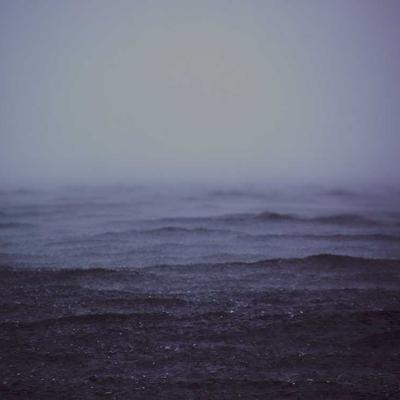 Martha.Brooks_2020—The Tusheng video is really powerful, and the steam seems to be really floating when the product picture is thrown in.
 -
 自在805—After more than 300 generations, about 70% of them can be used without re-rolling. The hit rate is much higher than the previous models. Especially when it comes to lighting and volumetric fog processing like Wet Night Neon, Ray3 is obviously more calm than Runway Gen-4. In the early days, the model's face became blurry and its fingers fell off when it moved. Now, mid-range portraits are basically stable, and complex multi-subject movements still drift occasionally, but I am satisfied with the overall filmmaking rate.
 -
 Russell_AllenSr—To be honest, the biggest difference of Luma is the HDR and EXR export. I connect the DaVinci color correction and directly throw it in without converting the format. This is very important for commercial orders. But if you are making short videos for social media, this function is a waste, and 1080p capping is not painful. If you really want 4K, you still have to use Kling or traditional NLE.
 -
 NataliePrice_772—The price persuades me not to give up. Plus, $30 a month is too expensive for people who play occasionally. Moreover, the points are cleared every month. If they are not used up at the end of the month, they will be gone. This is quite disgusting.
 -
 DAOthinker617—Silent output, remember to add the audio track yourself.
 -
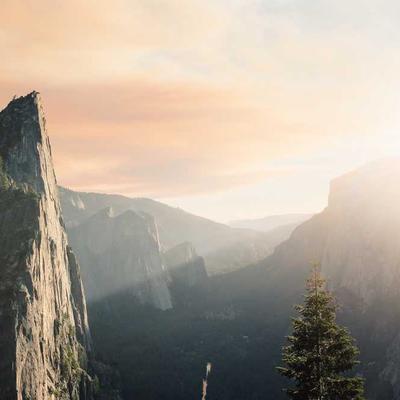 Kyle.SmithJr—With a maximum of 16 keyframes, the Ray3.2 update directly enhances the sense of directing.
 -
 清风388—Our studio currently uses Luma for all previews. For Draft, we first try 20 or 30 cheap versions, then select the best ones and then refine them with HDR. This can save 30 to 40% of the overall points. However, the production-level multi-camera with sound still has to be edited in the editing software. It is still capped at 10 seconds for a single shot. Long shots will drift, so don’t expect full automation in this regard.
 -
 Amy.Hill369—I have recreated the scene of the heroine in red in wet night in Tokyo. Her gait, swing of coat, and neon reflection on the ground are all correct. The camera moves like a real operator, not zoom, and the instructions are followed very closely.
 -
 菊花654—Crowded group performances are still a weakness, the background figures are easily blurred, so don’t force yourself on complex compositions.
 -
 NicoleJames520—The Pro is actually more cost-effective than the Plus at 90 dollars. The points are 4 times more. It is cheaper based on the points. If you really want to work, you can go directly to the Pro. The Plus will burn out quickly.
 -
 tinyleopard631—The billing experience is really bad, points consumption is not transparent, even if the points are not generated, they will be deducted. It is easy to receive surprise bills in the middle of the month, and the customer service is also slow. The official later issued a point table for each model and they seemed to have listened, but the shock of burning out in the middle of the month was still there. There is nothing to say about the visual quality, this reputation is well deserved.
 -
 Jeffrey_Foster—The face may melt occasionally, so be careful with long movements.
 -
 RasmusPerko—Modify Video is great for modifying existing materials. Changing the environment and dressing up does not destroy the original camera movement. It is very easy to reuse the assets for advertising.
 -
 MAgon—If you put text on the screen, it will be overturned, and the signboard words will be garbled, so don’t challenge it.
 -
 Eric_Smith_X25—After Sora was shut down, almost everything has been moved over. Luma can now run Ray3, Veo3, and Kling on one interface. The same prompt word is very convenient, and it saves the need to open a membership for each. The price is that the control is not as fine as Runway. If you want precise camera position, you still have to turn on Runway separately, but it is really good for quick film production.
 -
 CryptoTrader883—There is basically no free file. It is generated 30 times a month. It will be gone after a few iterations. If you want to play seriously, you still have to pay.
 -
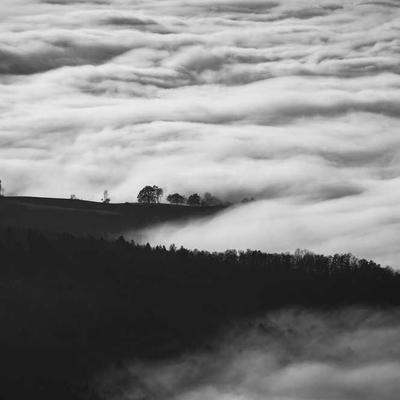 Olivia_MurphyIII—The selling point of reasoning is not a gimmick, and the complex multi-step action sequence really holds up.
 -
 W_Eort—I made a video of the product image of a ceramic mug. The rising steam, the displacement of the morning light, and the slight shaking of the hand are all natural, and the original cup has not deformed. This kind of dynamic e-commerce main image is Luma's strength. I will switch to Kling only if I need 4K plus ambient sound. It is the most stable for single images. The disadvantages remain: no sound, capped at 1080p.
 -
 silverpanda582—The best value for money so far.
 -
 MAr_ee—Write a line of prompts to clearly describe the main environment and the lighting of the camera. Don’t include too many actions, and the filming rate will increase immediately. If the prompt is poorly written, all kinds of strange movements will be used.
Similar Products
-
Zilivo AI一站式多模态 AI 创意平台,集成图像生成、视频生成、编辑与运动控制于一个工作区In-depth Report 25 reviews 13 related links
-
WomboAI 驱动的移动端创意工作室,将文字描述实时转化为风格化的数字绘画与短视频In-depth Report 20 reviews 22 related links
-
阿里 Wan 2.6 开源视频阿里通义万相2.6视觉生成模型,国内首个支持角色扮演的AI视频模型,可生成15秒多镜头声画同步视频In-depth Report 26 reviews 12 related links
-
Pixelcut面向电商卖家的 AI 图片与视频编辑工具,一键去背景、生成影棚级商品图In-depth Report 24 reviews 15 related links
-
Doubao App 2.0字节跳动旗下国民级 AI 智能 assistant,集文本, 图像, 视频, 语音 and 办公 Agent 于一体In-depth Report 21 reviews 11 related links
-
FocuSee 2.0AI 录屏工具,录完即自动出片,自动对焦放大、AI 字幕与降噪In-depth Report 24 reviews 8 related links
-
Pika 3.0把文本、图片、视频一键变成短小风格化动态短片的 AI 视频生成平台,主打快、便宜与趣味特效In-depth Report 19 reviews 20 related links
-
Hailuo AI Video 2MiniMax 海螺 02 视频generate 模型,用约十分之一的成本做出接近头部画质,物理动作 and 人物运动一流In-depth Report 14 reviews 16 related links
-
Kaiber 2聚合 Nano Banana、Veo、Kling 等多模型的 AI 创意套件,最大长板是让画面跟着音乐节拍In-depth Report 21 reviews 19 related links
-
Runway Gen-6AI 视频生成赛道控制力最强的专业平台,最新旗舰 Gen-4.5 主打运动真实感、镜头控制与跨镜头一致性In-depth Report 15 reviews 20 related links